
Have Questions? Call Us For Help: 508-690-0012
Able Account

An ABLE Account is a simple and powerful savings tool designed specifically for individuals with disabilities. It allows someone to save money for everyday needs or future expenses, without losing eligibility for important government benefits
Earnings in an ABLE account grow tax-free, and funds can be used for a wide range of disability-related expenses.

Helps individuals with disabilities and families understand how ABLE accounts can support savings, qualified disability expenses, and benefit protection.
This service is right for you if…
Consider this document when…
Many families don’t realize there’s a benefit-safe way to save — so savings either don’t happen or quietly create a problem.
Saving more than the usual resource limit in a regular account can reduce or interrupt benefits like SSI and Medicaid.
Gifts, birthday money, or work income may have no safe place to go, leaving families unsure how to set funds aside.
Everyday disability-related expenses can be harder to manage without a dedicated, protected account.
An ABLE account lets a person with a disability save and pay for qualified expenses while protecting benefits — and it works well alongside a Special Needs Trust.
An ABLE account works like an online savings account where a person with a disability can hold up to $100,000 without affecting their eligibility for SSI. Most states also provide tax advantages, making the account an easy way to save, invest, and protect financial resources.
Families often use an ABLE account to deposit birthday gifts, unexpected money, or excess funds from a checking account to stay under SSI’s $2,000 asset limit.
For many individuals with disabilities, asset limits can get in the way of financial independence. An ABLE account offers a safe, protected place to save money for things that improve daily life, from food and housing to assistive technology, education, transportation, or personal support.
Establishing an ABLE account does not impact eligibility for SSI, Medicaid, or other means-tested benefits. The beneficiary remains the owner and retains control over how funds are used.
Families often pair an ABLE account with a Letter of Intent, a personal guide that explains the individual's daily routines, needs, preferences, supports, and important contacts.
While not a legal document, the LOI becomes an invaluable resource for anyone who may step in to support your loved one in the future, ensuring continuity, stability, and respect for their wishes.
You qualify for an ABLE account if your disability began before age 46 (raised from 26 on January 1, 2026) and you either:
The account can be opened by the person with the disability, a parent, a legal guardian, or someone with power of attorney.
For 2026, contributions from everyone combined can total up to $20,000 per year. If the account owner works and does not participate in an employer retirement plan, they can add up to $15,650 more from their earnings (called ABLE to Work).
Balances up to $100,000 are ignored by SSI, and Medicaid eligibility is never affected by the balance. Money in a 529 college savings plan can also be rolled over into an ABLE account.
When the account owner passes away, remaining funds may first be used to repay Medicaid (the Medicaid payback).
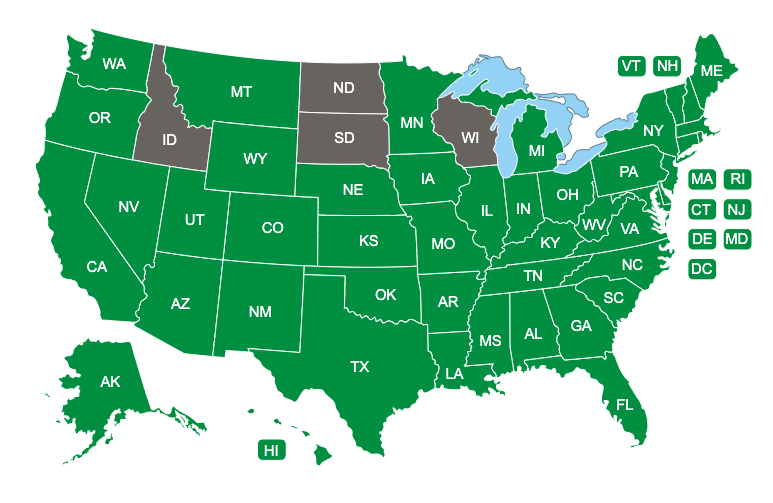
You can open an ABLE account in any state program that accepts out-of-state residents. You are not limited to your home state. Programs differ in fees, investment choices and state tax benefits.
Enter your name and email below and we will take you straight to our state-by-state guide to every ABLE program.
Expenses must relate to the individual’s disability and improve quality of life. Common uses include:
ABLE accounts allow individuals to hold more than $2,000 in assets — up to $100,000 — while still maintaining SSI and other benefits
Families often use an ABLE account to deposit birthday gifts, unexpected money, or excess funds from a checking account to stay under SSI’s $2,000 asset limit.
Families benefit from having both
ABLE Account or Special Needs Trust?
Together, they provide flexibility, financial protection, and long-term security.
Together, they provide flexibility, financial protection, and long-term security.
ABLE accounts are specialized bank accounts That are easily set up online and allows a person with a disability to accumulate up to $100,000 and not jeopardize their government benefits. in Most states these accounts are not taxed federally or by the state. They also can be a convenient mechanism toDeposit money from accounts that do count against SSI to ensure that the person with a disability’s accounts do not exceed the $2,000 limitation under many governmental benefits.


In 2026, the maximum that everyone combined (family, friends and the account owner) can contribute to one ABLE account in a single year is $20,000.
Each state also sets a lifetime account maximum, the same cap it uses for its 529 college savings plans. In many states that is more than $300,000 per account.
On top of the $20,000 annual limit, an account owner who works and is not enrolled in an employer-sponsored retirement plan may contribute extra earnings, up to $15,650 for residents of the continental U.S. (more in Alaska and Hawaii). This is called ABLE to Work, and it is now a permanent part of the law.
Working account owners who contribute may also qualify for the federal Savers Credit of up to $1,000.
Johnny has a disability and has been collecting SSI for a number of years. Johnny’s grandmother wants to give him a gift of $5,000. since Johnny has an ABLE account, Johnny instructs grandma to deposit the $5,000 into his ABLE account. Johnny now has $5,000 that he can spend on what he wants or needs, and still qualify for SSI benefits.
As long as a state’s ABLE program allows enrollment by out-of-state residents, you have the freedom to enroll in any state’s ABLE program regardless of where you reside and whether or not your state has established an ABLE program.
State ABLE programs that are open for enrollment nationwide are Ohio, Nebraska, and Tennessee. On the other hand, the Florida ABLE United program is an example of a state ABLE program that only allows enrollment for residents within the state.
Similar to 529 college savings plans, states are expected to provide various options for eligible individuals and families to establish ABLE accounts with different investment strategies. It is crucial to choose an investment option that aligns with your planned use of the ABLE funds and your risk tolerance. You have the flexibility to modify your investment selections within your account twice per year.
Use our quick form to jump to our state-by-state guide to every ABLE program. It shows which programs accept out-of-state residents.

ABLE accounts can be used to cover the expenses of the person with a disability. These may include expenses related to:
Education
Most states do not tax the interest earned on ABLE accounts at the federal or state level.
You can have up to $100,000 in your ABLE account and still qualify for governmental benefits. the Assets in this account do not count when determining governmental benefits.
You should have both an able account and a special needs they are both important tools in allowing people with disabilities to live full lives.
The able account is best used as a tool to protect assets on a short-term basis. for instance if you are getting close to the $2,000 asset limitation on your checking account and are collecting ssi, the able account is a good place to take money out of your regular checking account and deposit it in the able account, so that you will continue to be able to collect your government benefits. able accounts are very easy and free to set up. this is one of the reasons why they are a good tool to have. the downside of an able account is when the person with a disability dies the state, medicaid, has the ability to come in in charge back They spent supporting the person with a disability.
The Special Needs Trust is best used as a long-term planning tool. the Special Needs Trust is the ideal location to put money inherited from parents and grandparents. there is no asset limitation on the amount of money that can be deposited into a special needs trust. so while this account has a upper limit of 100,000, the Special Needs Trust has no such limitation, in fact you could have millions of dollars in the Special Needs Trust and still qualify for government benefits. another important difference between the able account and a Special Needs Trust is that when the person With a disability dies, the terms of the trust control where the leftover money goes. whether it goes to that person’s children, or wherever they have designated, Or whatever is designated in the trust itself. another important difference is when the person with a disability dies, the state, Medicaid, has no right to any of the assets in the trust.
Book a free consultation to learn more about how my services can help you provide financial protection for a child with special needs.
Everything your family needs to build a complete plan — explore our services and find the right fit.

Document care details and preferences for future caregivers — free.
Learn more
Leave gifts or inheritance to a loved one without affecting SSI or Medicaid.
Learn more
Protect a settlement, inheritance, or lump sum while keeping benefits.
Learn more
A coordinated Will and trust that work together to protect benefits.
Learn more
Name a trusted person to make medical decisions for you.
Learn more
Appoint trusted help with finances, benefits, and daily matters.
Learn more
Keep family support for IEP, 504, and college after 18.
Learn more
A less restrictive alternative to guardianship.
Learn more
Save and pay for qualified disability expenses while protecting key benefits.
Learn moreSpecial NeedsTrusts Online is the only online special needs trust platform created by a national disability-law expert and parent, operated by a nonprofit, and designed to guide families in plain English from start to finish without high fees, confusing legal jargon, or risky template forms.
Craft your Letter of Intent to guide your loved ones through your wishes and values

I am a special needs planning attorney and an expert in Special Needs Trusts and have been practicing disability law for more than 40 years. I am the father of an adult son with Down syndrome, so I know the challenges that families face when trying to provide a future for all their children. So if you are looking for an attorney for special needs planning, look no further. After years of the practice of law, I thought the best way to give back would be to provide special needs estate planning resources and documents for families with a child with special needs in an easy and affordable way. That is why I created this 501(c)(3) nonprofit corporation to provide families with an affordable way to protect their loved ones. Visit our planning resource center now by clicking here or set up a free appointment with me by clicking here!
The Eligible Individual may open and manage an ABLE account independently if they are over the age of 18.
If the Eligible Individual is a minor under the age of 18, is unABLE to open the account, or chooses to open an account but not exercise signature authority, an individual authorized to act on their behalf may open and manage the account as the Authorized Representative.
An ABLE account may be established by the Authorized Representative of an Eligible Individual in the following order of priority:
By opening an Eligible Individual’s ABLE account, the Authorized Representative is self-certifying that there is no other individual with a higher priority who is willing and ABLE to open and manage the ABLE account as the Authorized Representative.
Eligible Individuals who require the assistance of a trusted service provider also have the option to designate a Care Representative as their agent with authority to open and manage their account using a DurABLE Limited Power of Attorney for the specific management of the ABLE account.
Subscribe to our newsletter and receive a 10% discount on all our services. Select your preferred service below and we'll send your personalised offer straight to your inbox. If you don't see it in your inbox, check your spam or contact us at tom@specialneedstrustsonline.com
🔒 We respect your privacy. No spam, ever. Privacy Policy